
A member of the Surrealist group, Roger Caillois [Reims, 1913 - Paris, 1978], founded the College of Sociology with Georges Bataille. It was there that he met Victoria Ocampo in 1939. She had attended one of his lectures and, quite smitten, invited him to give a series of talks in Argentina; he was there when World War II broke out.
Upon returning to France, Caillois created a celebrated collection for Gallimard, La Croix du Sud, which published prominent Latin American authors. Furthermore, as Héctor Bianciotti recounts, "He was a profoundly intelligent man who had a passion: stones, or rather, the forms found at the heart of stones." [Editor's note]
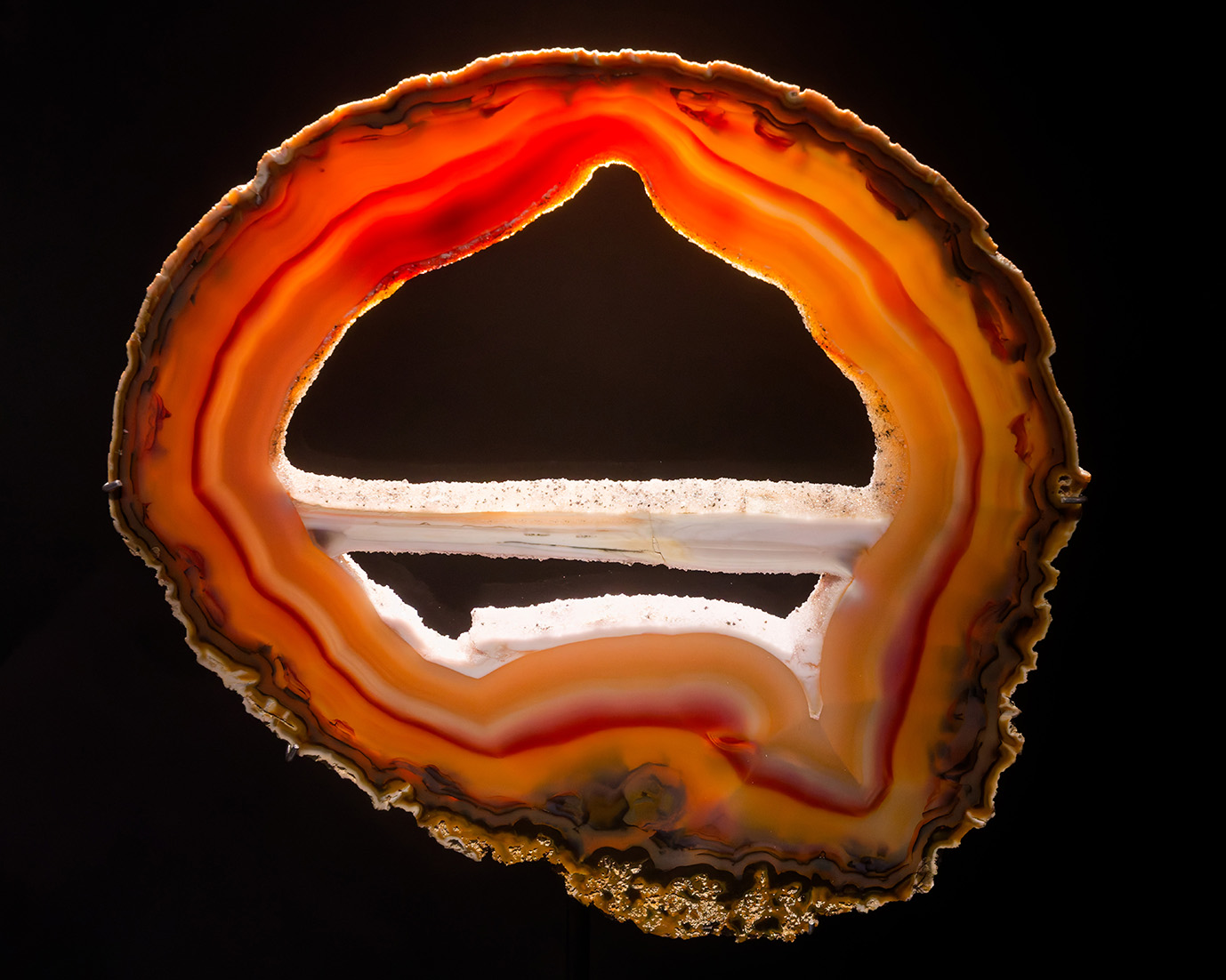
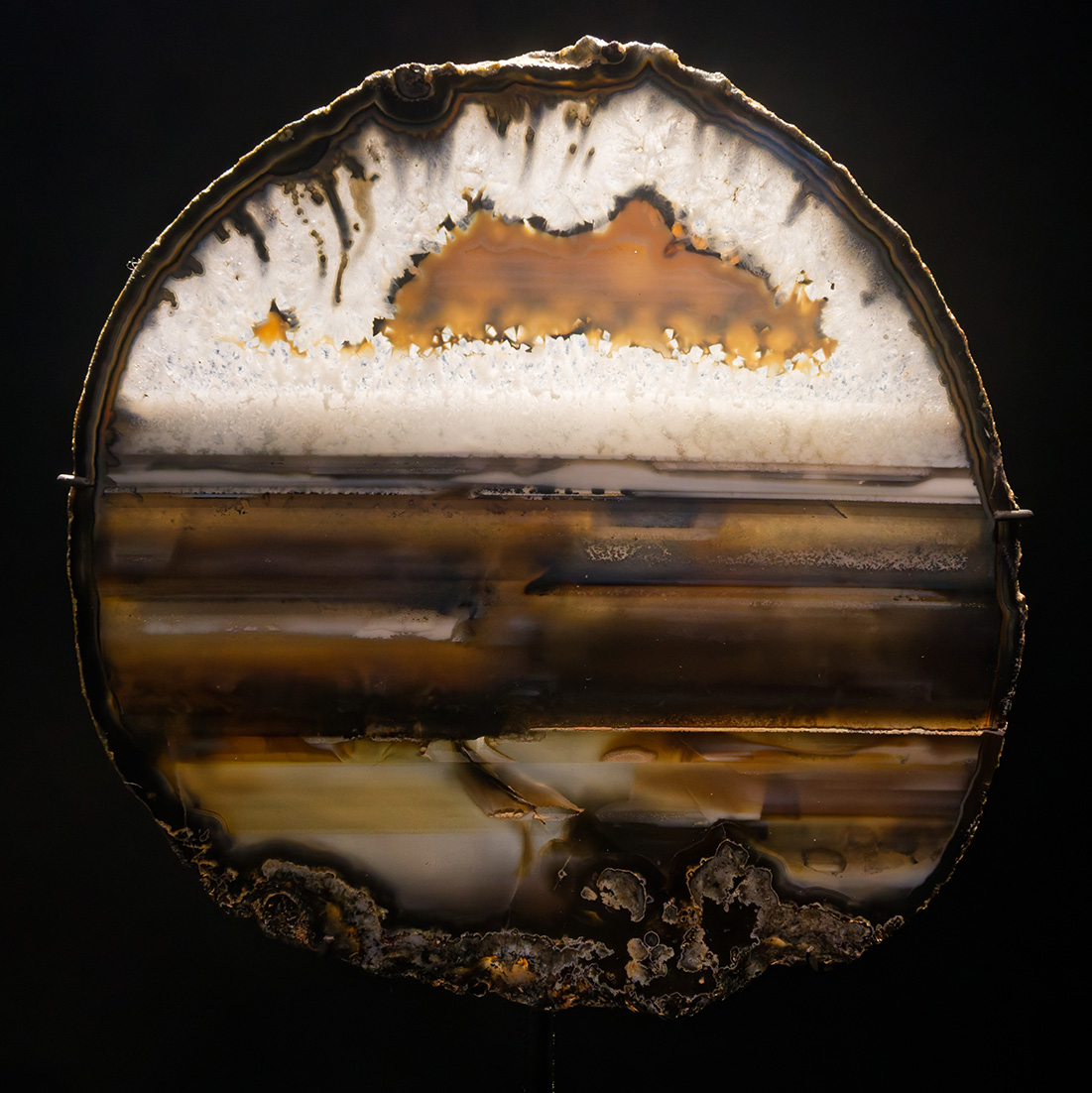
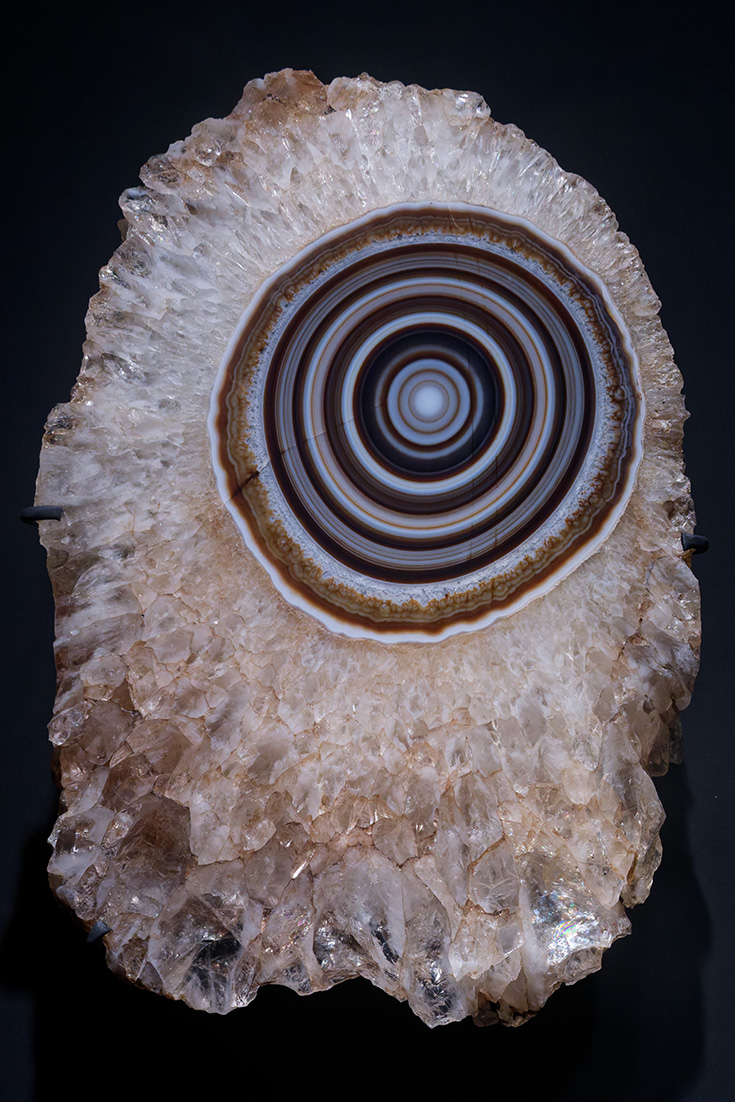
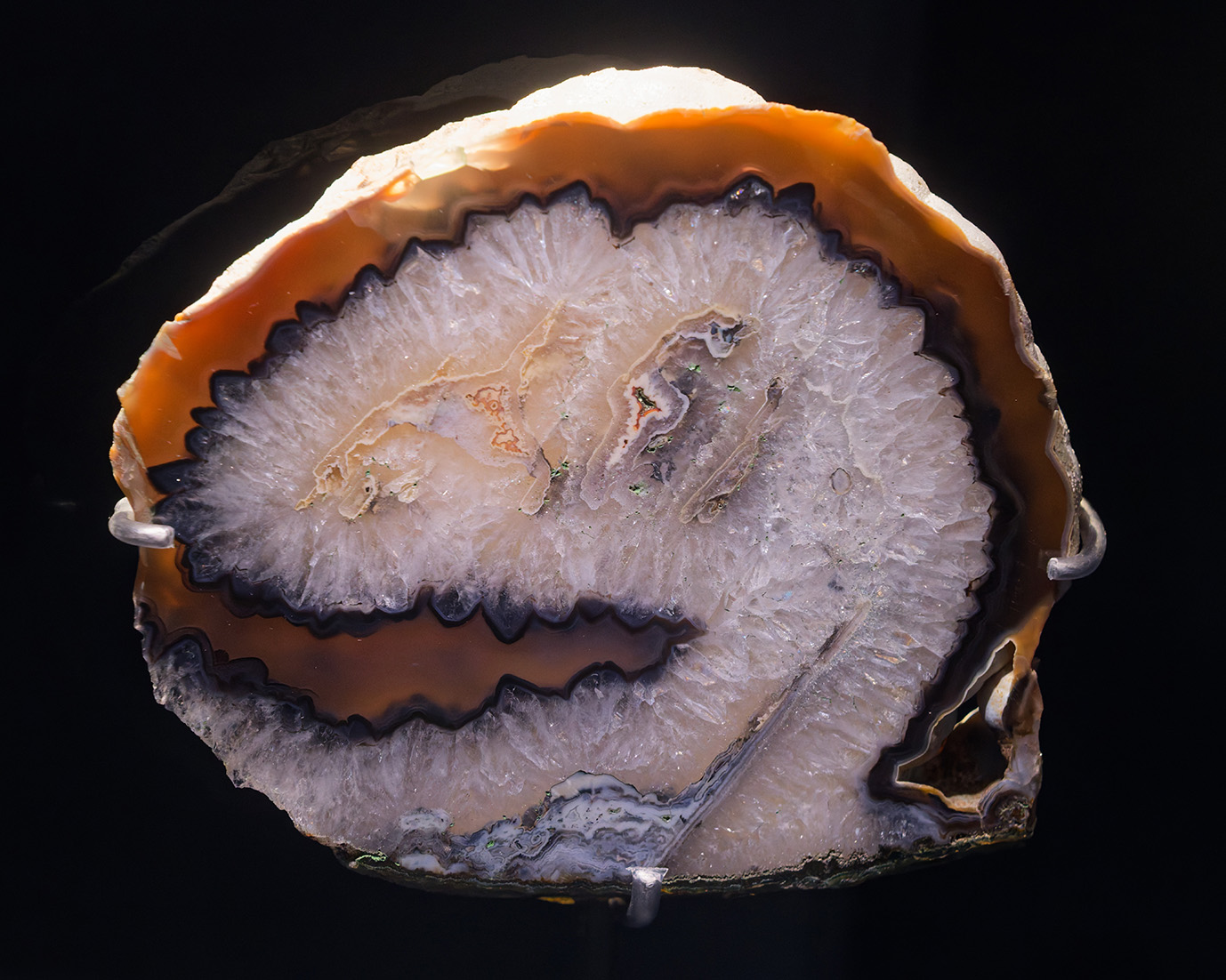
Between November 6, 2025, and March 29, 2020, the galleries of the École des Jeunesse de Paris hosted the exhibition RÊVERIES DE PIERRES. A retrospective exhibition, bringing together some two hundred specimens from the mineral collection of the French writer Roger Caillois [1913-1978], presented them as a central part of his work, his ideas about art and nature, and the process by which he began to see in these stones a kind of writing, somewhere between cuneiform and hieroglyphic, made by the Earth itself.
The exhibition was conceived by François Farges [1962-], a specialist in environmental mineralogy, that is, the traces of heavy metals in the landscape and natural environments. Farges has also dedicated himself to the mineralogical heritage of his country's museums, particularly the history of iconic gems such as the blue diamond from the French Crown Jewels, stolen in 1792, and the great sapphire of Louis XIV, a jewel originating from present-day Sri Lanka. Since 2006, Farges has been a professor at the National Museum of Natural History in Paris, an institution that, after Caillois's death, has preserved a thousand of the semiprecious stones that the writer began collecting somewhat by chance in 1952. Farges oversaw the initial donation of two hundred stones received between 1983 and 1985. Thirty years later, thanks to the patronage of Van Cleef & Arpels, the firm that supports the School where the exhibition is held, another thousand were added. Some are on permanent display at the entrance to the Mineralogy Gallery in the Jardin des Plantes. Others were exhibited in 2021 in "Precious Stones," under the same patronage and to great public acclaim—another indication of the French love for the sparkle of jewels, which, it seems, sometimes leads them to crime.
The specimens belonging to Caillois, an inveterate traveler and lover of Argentina and the American continent, did not come from his adventures in quarries or mines, but rather from purchases made through agents specializing in stones of all kinds. Caillois, it could be said, compiled a history of contingency made manifest in agate or chalcedony from time immemorial, without witnesses, in nameless territories that today are called Minas-Gerais, Karelia, the Uruguay River, Japan, China, or Madagascar. Hundreds of pieces of quartz and flint accumulated, journey after journey, in the display cases in his home, pieces that, depending on the occasion, he named as "objects of a crossroads or hinge," "fairy objects," or "aesthetic or pictorial stones." Caillois would take pictures with them, show them with delight to those who visited him and, very sporadically, make them known in the art galleries of his Parisian acquaintances, as happened in 1965 in the Katia Granoff gallery.
Around these figures, he developed his reflections on the relationship between art, nature, and imagination, which, beginning in 1959, appeared in various essays, including *The Writing of Stones*, his most famous work on the subject, published in 1970 by Albert Skira, the Swiss-French publisher specializing in art history series and works on the Surrealists, and one of the driving forces behind the magazine *Minotauro*. This book, like the exhibition, brought together texts and images, a testament to the processes of imagination and writing that were unleashed, guided by the question of whether the allure of the figures could impede their analysis. The demon of analogy, which he feared, probably swallowed him whole, because in all his disquisition on stones—those which, according to him, generate no interest in anyone and yet precede everyone—Caillois forgets the humans—his contemporaries—who stand behind them.
Thus, in the text that opens the exhibition, Caillois states that he will refer to "Stones that are of no interest to archaeology, nor to the jeweler, nor to the artist, that are not in rings or diadems, in tombs or statues." Probably, but far from being a direct testimony traced by the planet, these figured stones reached him and so many others through Renaissance traditions and numerous intermediaries, merchants and artisans who learned to find, cut, polish, and present the shimmering agates of the entire world as landscapes. One need only take a train from Paris to Saarbrücken and change to Idar-Oberstein, a town that no one knows but which, since the mid-19th century, has been one of the global centers of the trade and industry of stones. The artisans and families living there, after the local agate supply was exhausted, began buying the raw material in Brazil, Uruguay, Africa, and New Zealand to return it to those countries ready for sale or to offer it to buyers closer to home. Idar-Oberstein, in its two museums—the Gem Museum and the Mineral Museum—exhibits the same type of object that captivated and inspired Caillois, but unlike the Paris exhibition, here one sees the history of the human work with these stones: several rooms display the tools, the body positions, the models of mills and workshops, the use of water, and the machines necessary to cut, polish, and thus obtain various cuts with dazzling figures and lines engraved by Mother Earth. To avoid any doubt: chalcedony and flint are configured in this way, in bands of various subtly contrasting colors, but for them to be visible, marketable, or legible, someone—an artisan with the necessary knowledge and calluses—had to spend hours lying face down, taming the material's hardness.
Perhaps Caillois should have focused more on interpreting the stones and less on those scribbled lines by a co-author more human than earthly. In any case, in 1971, he was elected to the French Academy, and as a future "immortal," he had to have his sword made—that symbol that forms part of the academician's uniform, inherited from the nobility, and which, with personalized hilts, reflect the life and work of the chosen one. The sword is financed through subscriptions from friends and admirers or from his own pocket. The exhibition features a special display case for Caillois's sword—usually housed in the Musée des Confluences in Lyon—and the texts he wrote about its significance. For its design and creation, Caillois chose the jeweler Jean Vendôme (1930–2017) and stones that represented the nature and travel history so dear to him: the Southern Cross—the constellation that shaped his destiny and lent its name to the collection he edited for Gallimard; Bohemian moldavite to recall the homeland of his wife, Aléna; tourmaline as a representation of Brazil; and a piece from his personal collection, "a stone from space that fell to Earth." These were complemented by white gold, steel, diamonds, quartz, beryl, amethyst, and obsidian.
The exhibition concludes with the presentation of "Anagogic Stones," texts discovered in 2023 in the Vichy library, fragments of an unfinished literary work. Anagogy refers to the work of Bernard of Clairvaux, who in the 12th century proclaimed the elevation of the spirit toward the divine through stones. One of the merits of this exhibition, besides the beauty of its presentation, is having reunited what history had separated: the stones that inspired Caillois, now preserved in the Museum of Natural History, with the books and manuscripts from Vichy to define what, in Farges' words, constitutes the poetic-mineralogical testament of an immortal.
* Special for Hilario. Arts, Letters, Crafts