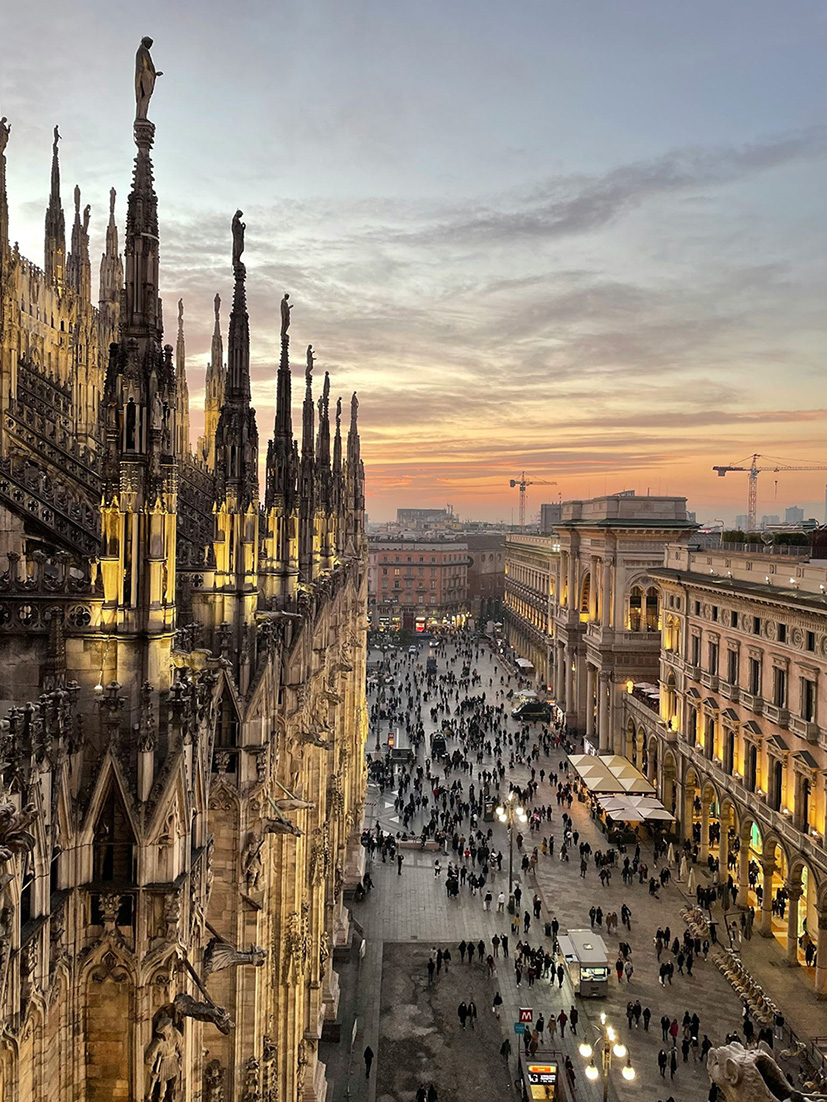
Design Week, this year running from April 20th to 26th, transforms Milan into a special place where the most innovative trends converge, engaging in dialogue with traditions and the decay of an unguarded past, generally hidden from the view of the average citizen the rest of the year.
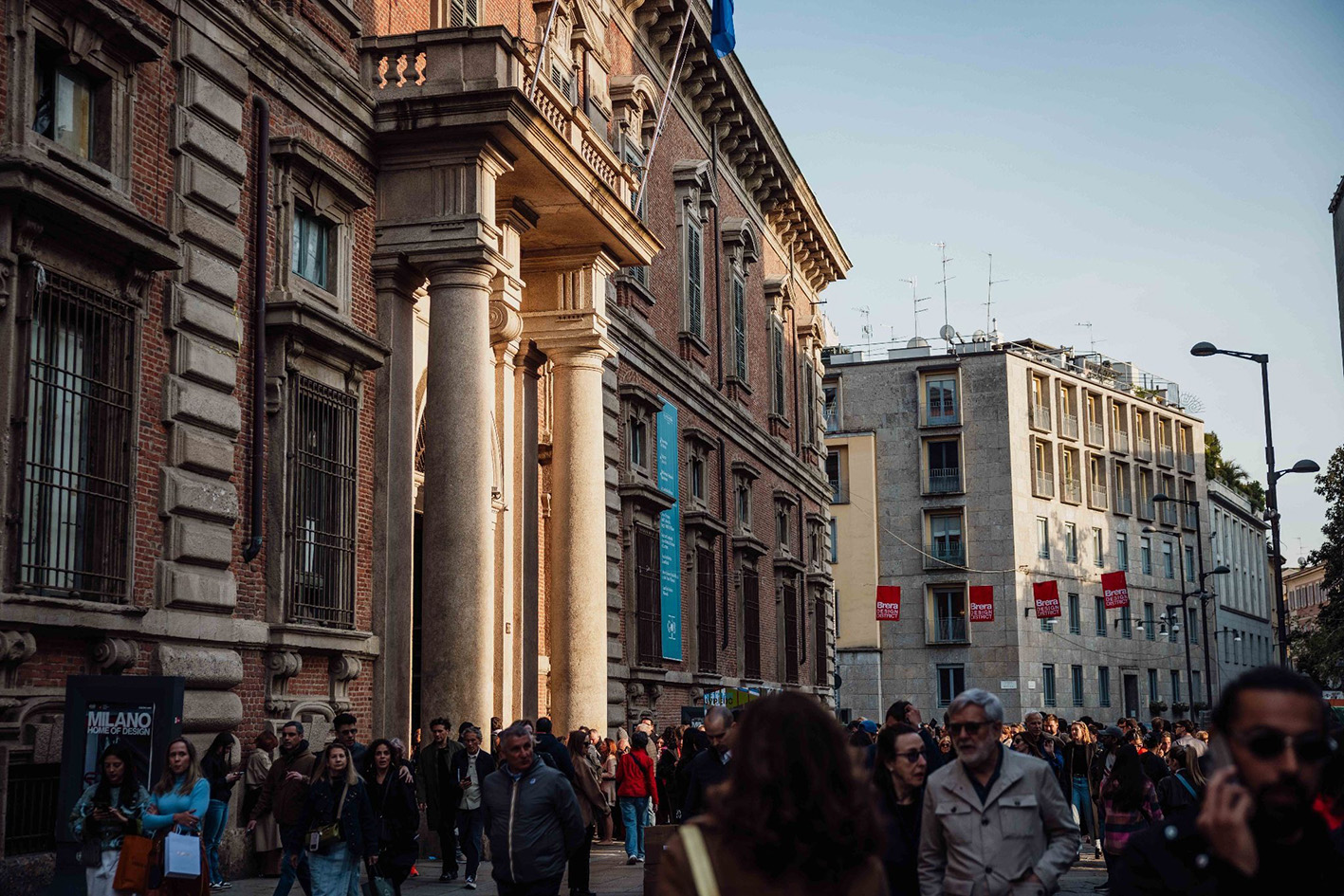
There's a line to get into Palazzo Litta. The building spends most of the year closed, or almost. Now, however, the gate is open, and a pink labyrinth occupies the 16th-century courtyard. People enter, wander around, take photos—lots of photos—as if it were all perfectly expected and logical. "The great thing about this week is that you can get to know the city much better and visit impenetrable places," a friend tells me as we try to find a way to skip the line, something that's almost becoming a sport [with apologies to my parents, who raised me so well...]. He's absolutely right. It's April, and for one week, Milan is transformed.
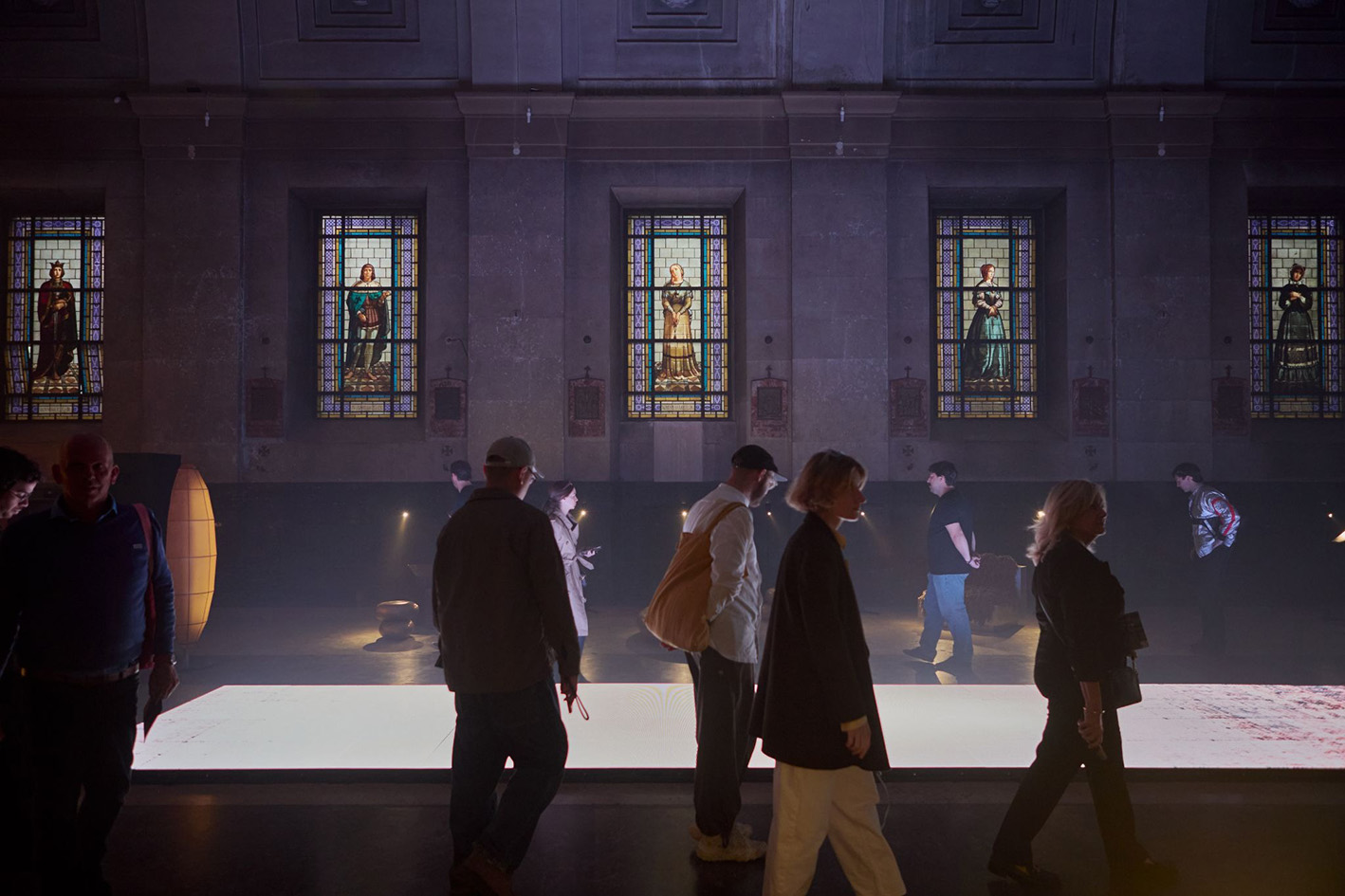
One afternoon, the days blurring together, I'm sitting in the sacristy of Santa Maria delle Grazie, listening to a talk on the concept of visibility. The two speakers speak with the seriousness of those who know the subject and give it the importance it deserves. We've been listening for thirty minutes, attentive and almost motionless, about algorithms and the power of light. We go out into the cloister and music envelops us; someone in the group says it before the rest of us can even think: "I felt like I was listening to a homily." We laugh. The comparison is apt. After wandering through three exhibitions, talking just meters away from Da Vinci's Last Supper, it's not hard for design to acquire a religious gravity.
However, not all experiences carry that weight. Another afternoon, at a book club, a lecture that promised so much fell short of what could have been its introduction. I exchange glances with two friends, and the agreement is unanimous: something was missing. Even though everything seems to shine, the Salone del Mobile program also has its filler.
What never disappoints is the city. Milan in April ceases to be Milan and transforms for a week into an open-air party. You walk from Brera to 5 Vie, from 5 Vie to Tortona, and on every block there's an open door that the rest of the year is impenetrable. A hidden courtyard appears, a building whose gate you've looked at a thousand times without knowing what lay behind it is revealed. In the Pagano area, I arrive at an apartment transformed into a living archive. With a glass of mezcal in hand, I observe rugs with figures I recognize without ever having seen them before, ceramics with a familiar feel but translated into something else. The exhibition combines memory and reinterpretation, connecting ancestral Mexican references with contemporary forms. It makes me think about how cultural memory is something active, something that is built and rebuilt between past and present. I'm still pondering this when I find myself at a public fountain, on the other side of the city, looking at a collection of glass works. The light plays with the glass as it must have once played with water. Everything coexists.

Figures, both ancient and modern, combine in a rug from the Balmaceda Codex Collection, showing us that traditions are constantly being updated. Photograph: Omar Sartor.
Something peculiar happens: amidst so much novelty, what begins to repeat itself are the people. A girl I exchanged a few words with at an exhibition appears in a bar. Someone who was in front of me in one line appears two places behind in another. From there, they rush off to aperitifs with friends. Even those who complain about the week join in this Milanese ritual. The truth is, everyone wants to participate, even if just a little. What did you see today? Is that exhibition worth it? I liked it better last year. I won't make it, it closes too early…
While we are immersed in this conversation, a friend, his gaze lost in the street, states: “Rio has Carnival, Milan this week.” One of us looks at him with an expression of disbelief, the other nods slowly. We look around and realize that the statement is not at all an exaggeration. The city, generally distant and somewhat impersonal, becomes complicit and festive.
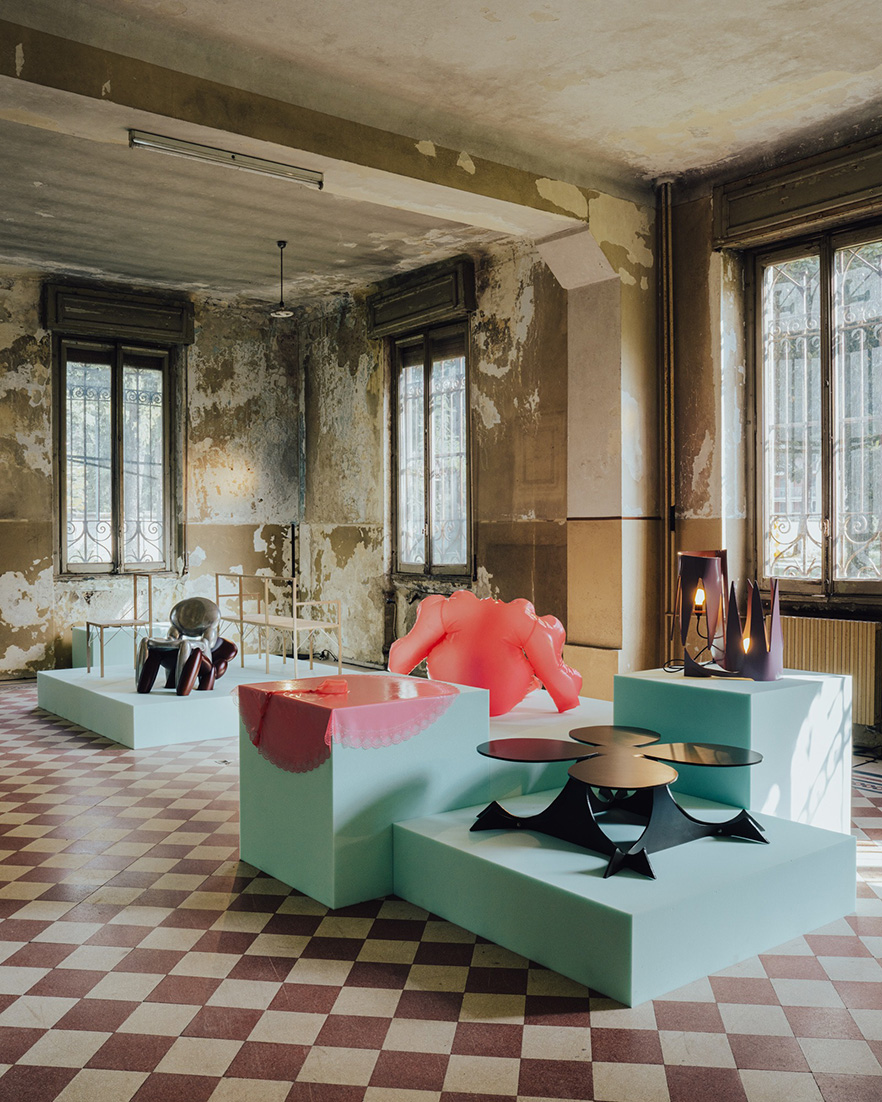
The day I go to the military hospital is probably the one that best captures the essence of this very special week. The pavilions, long closed and almost in ruins, are now opening up and receiving installations, objects, prototypes, people. There's a smell of confinement and fresh paint at the same time. Footsteps sound different in each room, amplified by the high ceilings. Where there was a bed, there's an impossible chair. Where the kitchen was, a piece of blown glass. The result is deliberately ambiguous. Peeling walls, precise installations, objects that seem out of place, but aren't. That's the beauty of Milan: knowing how to arrange objects to create a new and surprising atmosphere.
The party, or parties, flow into one another. One in a museum where we're first forced to see the exhibition before we can go to the bar. Another in a house where we greet the host effusively, only to discover he isn't. And one more in a room that's too crowded, where the music forces you to shout. The euphoria of these nights is made up of accumulated exhaustion—is it just one night, or several?—and the awareness that this will all be over soon. On Monday, the city will be back to normal. I have to make the most of it.
I leave the last one without knowing the time. I know my feet hurt, that I'm carrying yet another tote bag, and that in one week I met more people than I'll ever be able to remember. I walk. At a nearby bar, they're lowering the shutters, but the music is still playing loudly. A group of people splits up. One waits for a taxi. Another heads for the metro, unaware that it's already closed.
The music stops abruptly.
Just like that, without warning, Milan begins to pack away/hide everything until next April.
* Special for Hilario. Arts, Letters, Crafts