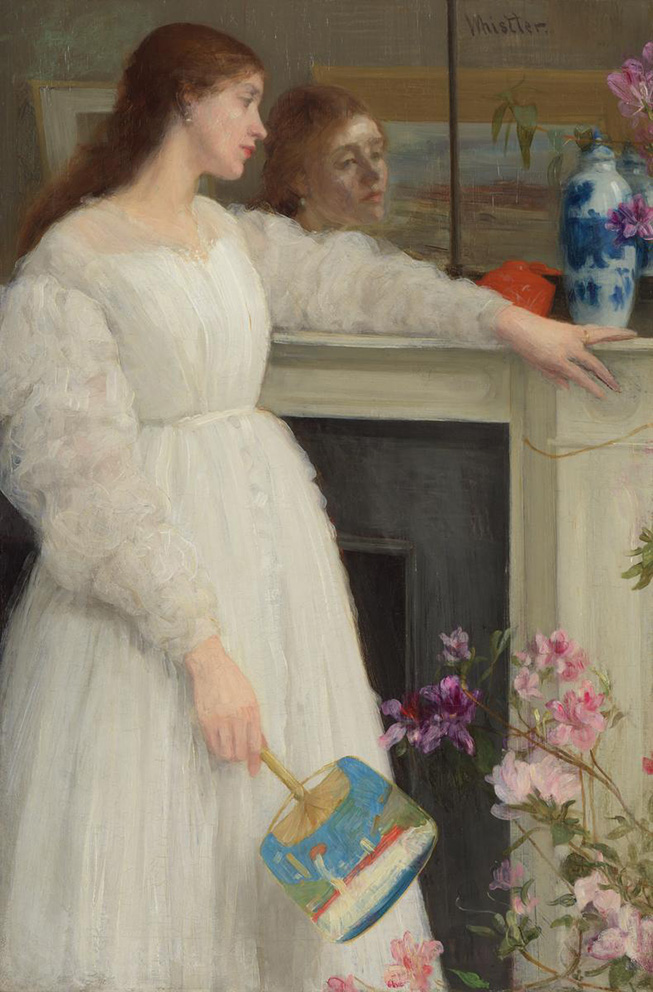
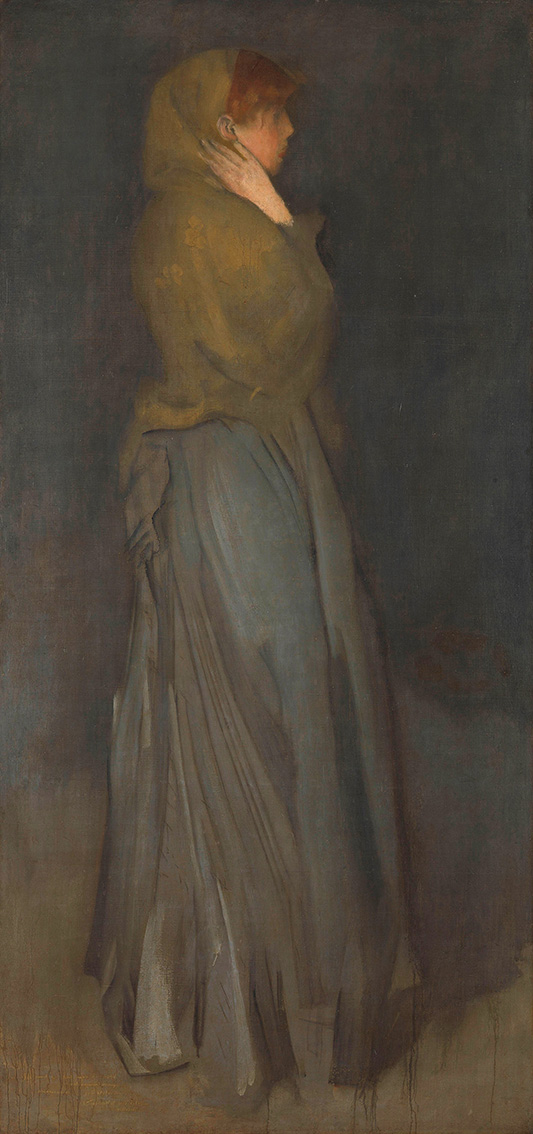
"Wow! Just a moment. This is important. Beauty has returned." That is how Laura Freeman begins her recent review in *The Times* of the James McNeill Whistler retrospective. Alastair Sooke, a critic for *The Telegraph*, is no less enthusiastic: "It is rare these days to find an exhibition not driven by identity politics, yet Tate Britain’s compelling Whistler show is a pure celebration of artistry. How could it be otherwise? Whistler believed in art for art’s sake, and the Tate focuses on his fearless pursuit of beauty—precisely at a time when, in many artistic circles, 'beauty' has become a dirty word."
It is a contentious subject, to say the least. Today, concepts, ideas, and artistic expressions of every kind are proliferating. The very universe that has linked beauty with art since time immemorial has evolved throughout history, transforming everything in its wake.
The ancients focused their gaze on perfection. A Greek sculpture was inconceivable without absolute harmony; everything had to align with the canons representing the ideally beautiful human figure.
Upon entering the Pantheon in Rome, one immediately senses that beauty arises from the space itself rather than the form. Enduring buildings are not always those that are merely aesthetically beautiful; rather, they are structures where light, proportion, materiality, integration with the surroundings, and the experience of moving through the space come together in an exceptional blend.
The Middle Ages shifted the ideal toward the mystical, placing religious themes center stage. Beauty took on a serene quality, focusing on the depiction of figures that were somewhat unreal, naive, and stylized—where Virgins and donors occupied similar positions in altarpieces and paintings. Delicate foliage adorned the works with a level of detail worthy of manuscript illuminators. Hildegard of Bingen—a 12th-century German abbess, painter, and composer of sacred music—depicted mystical visions with great spiritual intensity. The Florentine artist Giotto di Bondone broke away from the flat Byzantine style, imbuing his figures with genuine emotion through the use of volume and gesture. This vast array of artists—many of whom remain anonymous—sought not merely to please, but to teach the revealed truth at the heart of Christianity. Goodness and beauty converged in frescoes, altars, manuscripts, poems, and choral music. The Archpriest of Hita, in his *Book of Good Love*, interweaves lighthearted tales with moral lessons, while Dante Alighieri himself guides us through Hell, Purgatory, and Heaven in his verses.
The Abbey of Mont Saint-Michel, extending from the mainland toward the water in a slender spur, stands as one of many examples of extreme architectural mysticism. Chartres Cathedral—a paragon of the purest Gothic style—silently envelops the visitor upon entry into a magical realm of light-filled wonder created by its magnificent, multicolored stained-glass windows. Humanity sought to reach God. Towering walls, resembling intricate stone lacework, are supported solely by slender flying buttresses—minimalist in design—allowing the resulting interior space to feel all the more awe-inspiring.
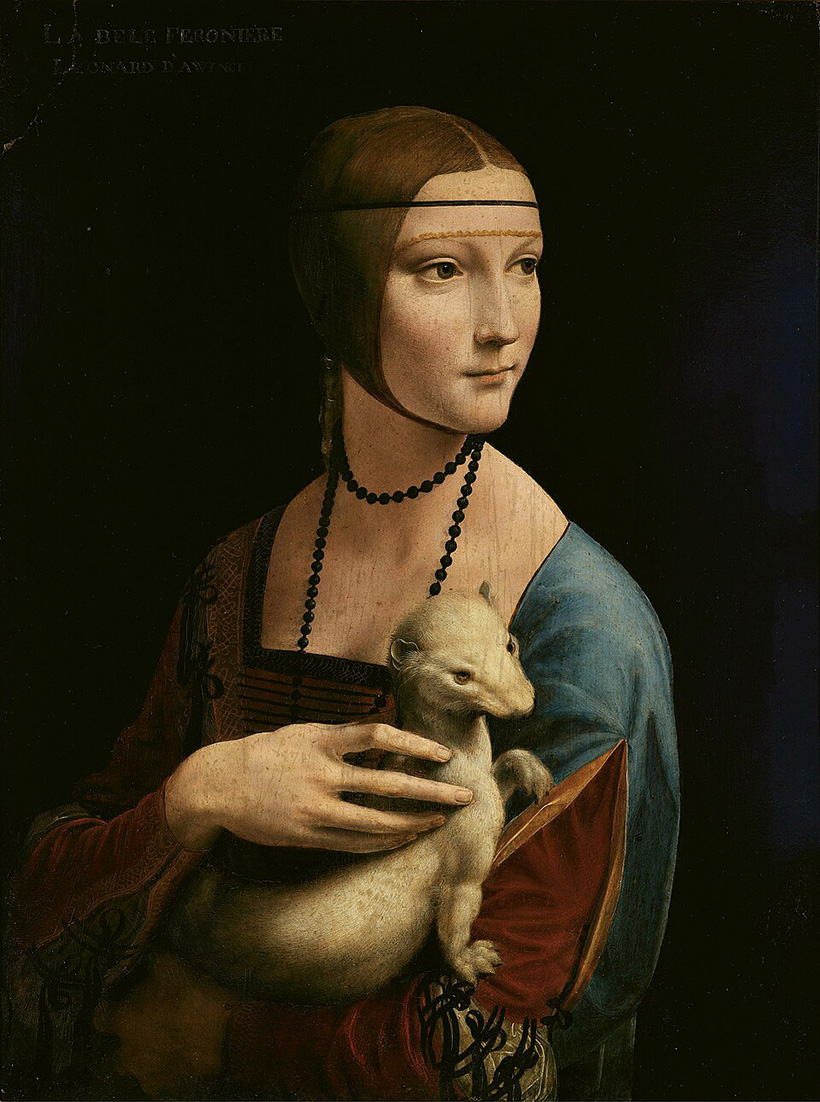
The Renaissance was a monumental artistic revolution that continues to make a profound impact on us today. By reviving the classical Greco-Roman canon, the human figure and mathematical perspective became the focal point of aesthetic creation. How could we not be repeatedly moved when admiring the perfection of Leonardo da Vinci’s *Lady with an Ermine*, Sandro Botticelli’s *The Birth of Venus*, Michelangelo Buonarroti’s *David*, or Raphael Sanzio’s *The School of Athens*? Studied, analyzed, and examined closely time and again, they inevitably command our attention; in them, beauty endures forever.
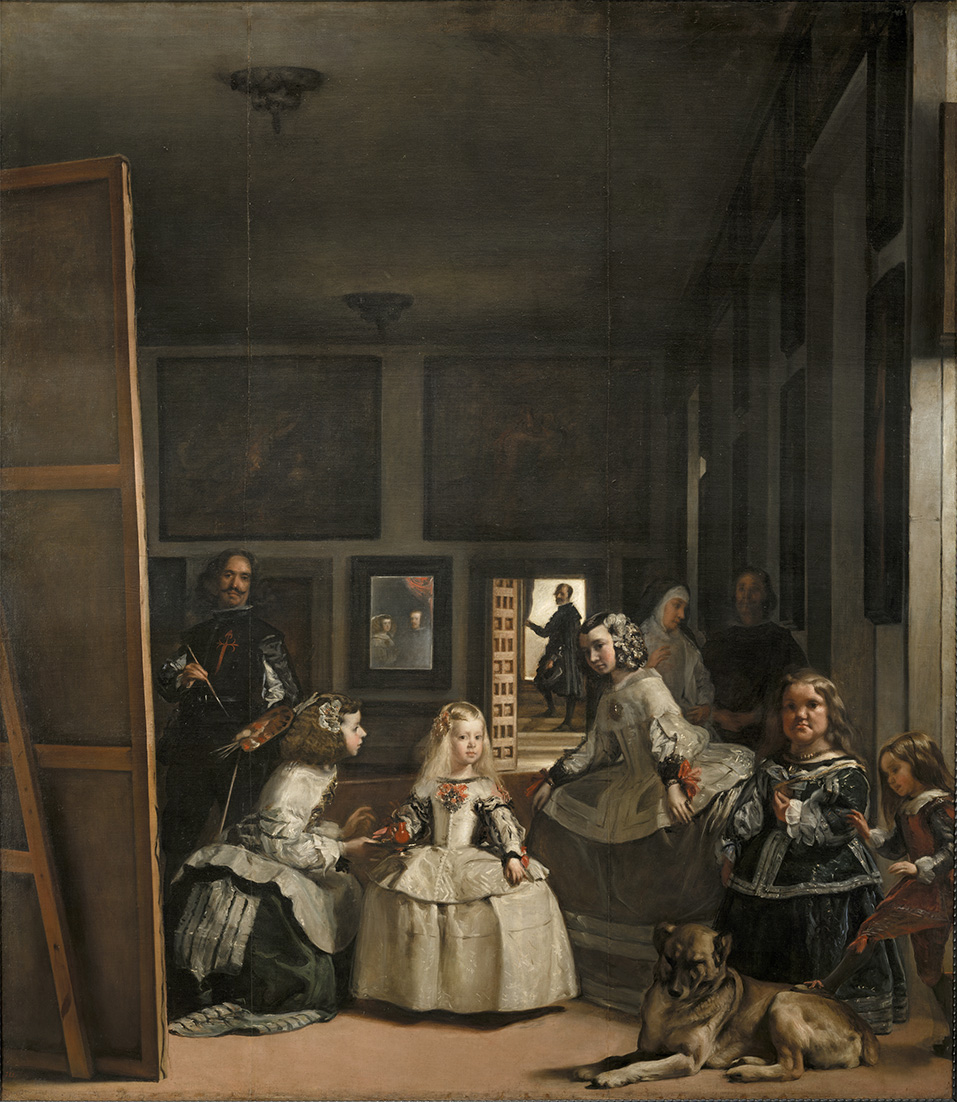
Then came the exuberance of the Baroque. Art became dynamic, playing light against shadow. Ornamentation became elaborate—in stark contrast to the balance and symmetry of the Renaissance. Works such as Diego Velázquez’s *Las Meninas*, Gian Lorenzo Bernini’s *Apollo and Daphne*, and Caravaggio’s *The Calling of St. Matthew*, as well as the Church of San Carlo alle Quattro Fontane in Rome, resonate with the sounds of Antonio Vivaldi’s *The Four Seasons* or Giuseppe Verdi’s "Va, pensiero." Literature transported us to worlds of disillusionment and pessimism through an ornate style—rich in metaphors and hyperbole—that never shied away from themes of the fleeting nature of time or inevitable death. The play *Life Is a Dream* by Pedro Calderón de la Barca and the picaresque novel *El Buscón* by Baltasar Gracián further reinforced this concept of contrasts and exaggeration.
In Romanticism, art emerged spontaneously from the individual's soul, exalting nature and the human spirit while being guided by passion and emotion. Towering mountains, stormy seas, and mists served to demonstrate the insignificance of human beings in the face of the world's power. What the artist felt—sadness, passion, fear, love—mattered more than the exact replication of reality. Works such as Caspar David Friedrich’s *Wanderer above the Sea of Fog*, Théodore Géricault’s *The Raft of the Medusa*, and Eugène Delacroix’s *Liberty Leading the People* marked the starting point for a new vision of painting and the arts in general.
Ludwig van Beethoven served as the crucial bridge to Romanticism, while Frédéric Chopin—through his *Nocturnes*—established himself as the undisputed master of the piano. Franz Schubert’s *Lieder*, Tchaikovsky’s symphonies and ballets, and Richard Wagner’s operatic revolution embodied freedom of expression and individuality in musical creation. In literature, authors such as Mary Shelley, Goethe, Victor Hugo, Charlotte Brontë (creator of Jane Eyre), and Gustavo Adolfo Bécquer prioritized emotion, artistic freedom, and imagination over any fixed rules.
In the mid-19th century, Realism began to depict daily life and social issues, setting fantasy aside. Gustave Courbet—with his *A Burial at Ornans*—and our own Eduardo Sívori—with *The Awakening of the Maid*—revealed a different kind of beauty that humanized their subjects within scenes of profound intimacy.
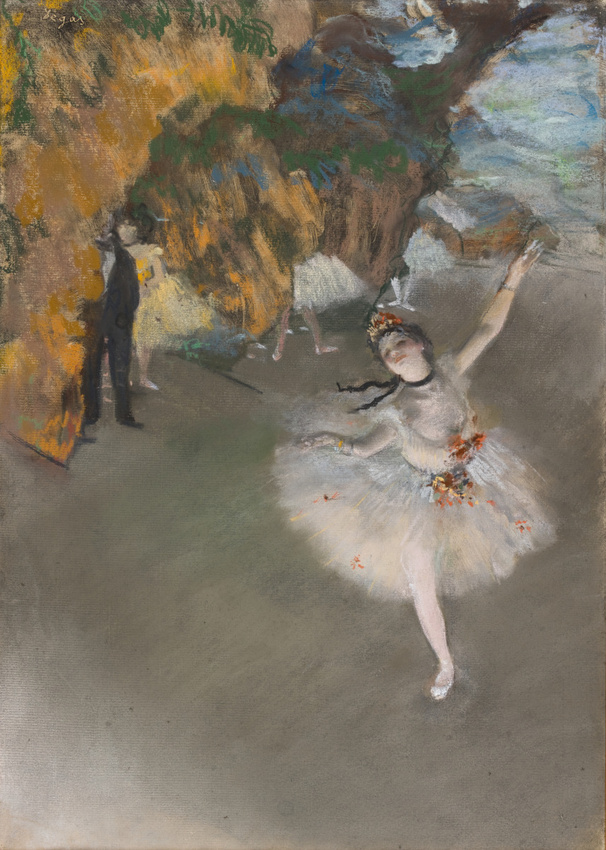
Claude Monet’s *Impression, Sunrise*—featuring an orange sun as the focal point of a barely sketched Le Havre harbor at dawn—gave birth to Impressionism, a movement initially misunderstood and criticized by a society accustomed to academic art. The landscapes of Camille Pissarro (evoking atmosphere and scent), the snowy streets of Alfred Sisley, the portraits and café scenes of Pierre-Auguste Renoir, and the unmistakable, ethereal dancers of Edgar Degas transformed the aesthetic path pioneered years earlier by Édouard Manet. Forms opened up, light flooded the canvas in multicolored dots, and art broke free from convention—all while remaining grounded in consummate painterly skill.
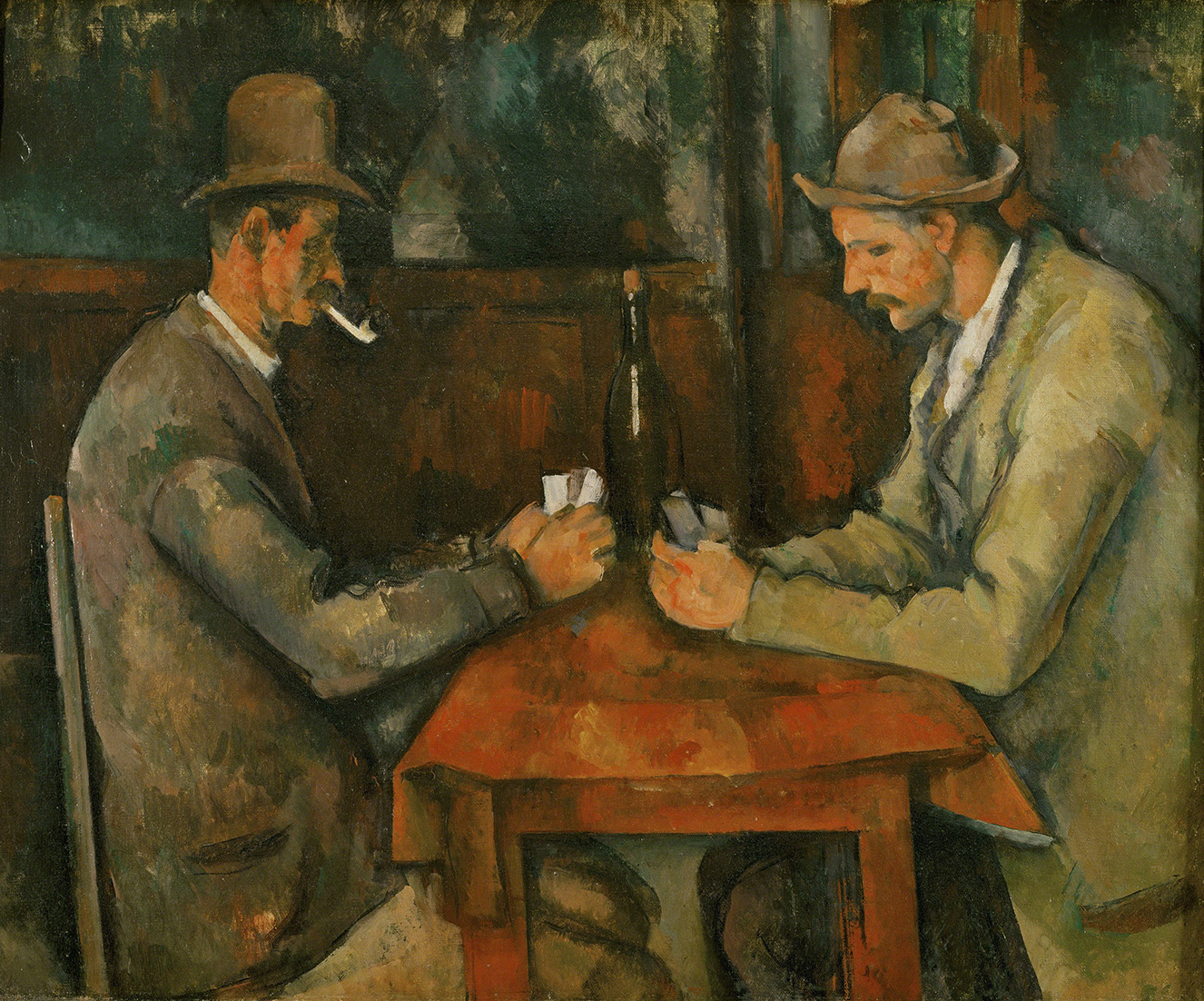
Paul Cézanne’s *The Card Players*, Van Gogh’s *Portrait of Dr. Gachet*, and Paul Gauguin’s gentle Tahitian figures continued to blaze new trails, where beauty remained embedded in every brushstroke.
Henri Matisse, the father of Fauvism, championed color and simplification in his striking figures. German Expressionists such as Ernst Ludwig Kirchner, Franz Marc, and Emil Nolde—among others—may not have created "beautiful" paintings in the traditional sense, but they pushed the human figure to a state of extreme tension. The Great War intensified this trend, which has persisted through various forms of Expressionism to the present day. Pablo Picasso, one of art history's most versatile artists, moved from the anguish of his extraordinary Blue Period to the serenity of the Rose Period, eventually finding in Cubism a way to incorporate time and movement into two-dimensional painting. Standards of beauty were undergoing rapid transformation.
In 1916, at the Cabaret Voltaire in Zurich, Dadaism gave birth to "anti-art"—a movement that rejected all order and traditional aesthetic conventions. Tristan Tzara acknowledged the existence of beauty, yet the despair caused by the disasters of the Great War sparked all manner of protest against the established order.
Following this trajectory, the Surrealist movement emerged in Paris with André Breton; it encompassed not only painting but also literature and cinema. It sought to liberate the mind from logic and reveal the realm of dreams and the unconscious. Automatism was born, allowing the hand to draw or write of its own accord, free from moral constraints. Salvador Dalí’s melting clocks, René Magritte’s pipe, Joan Miró’s simple forms, and the mysterious works of Remedios Varo all stand as examples of magical beauty.
The advent of photography and cinema freed art from the obligation to replicate the real world. These movements sought to provoke and unsettle the viewer while exploring new formal and conceptual languages.
Ultimately, the twentieth century would gradually lead us into our current era—a time that is confusing, ambiguous, ever-changing, and voracious, completely permeated by technology and an overwhelming flood of information. It is impossible to list the countless examples that exist today. Distinguishing the excellent from the mediocre, the improvised from the expertly crafted, and the boundaries between human creation and Artificial Intelligence has become a difficult task.
Where, ultimately, does the concept of beauty stand after a concise journey through the history of art up to the present day? I would venture to say that, nowadays, there are no clearly defined artistic movements. We speak instead of concepts, ideas, realities, fictions, and projections—which are subsequently dismantled or deconstructed—as well as spectacles, crafts, installations, performance art, fashion, gastronomy, and many other manifestations that are considered art today and coexist in an intermingled state. Often, we do not even know who the artist is. We require theoretical frameworks to understand these works and the purposes for which they were created. Few people remember what they have seen unless they are involved in the art world, and the essence of what constituted traditional aesthetic beauty has been transformed. Perhaps we can find it—to cite just one of the thousands of examples we see daily—in the work titled "Iceberg" by Jorge Gamboa (Mexico, 1984). It is a high-quality painting depicting the tip of a fantastic triangle of ice emerging from a sea that is both unsettling and serene; beneath the surface, we discover a much larger portion of that same mass hidden in the ocean—revealed to be an immense accumulation of waste. The message regarding the need to care for the planet is crystal clear, immediately prompting us to reflect.
We live in a world where individualism is an almost absolute stigma. In many cases, our fellow human beings seem non-existent, and the whirlwind of a digital Babel leaves us defenseless against a sense of loneliness, even amidst constant and exhausting virtual company.
Are we still open to loving the beauty found in J. M. W. Turner’s mist, Henri de Toulouse-Lautrec’s women, or Whistler’s portrait of his mother? Can we still be moved when we see them again? Do we experience similar sensations when tracing the arabesques of Jackson Pollock, the near-abstract water lilies of Claude Monet, an Antonio Berni "Ramona Montiel," or the sculptures of Chola Poblete?
It would be bold to claim we would all agree that beauty is present in each of them to the same degree. Yet, if we accept that the parameters of beauty have shifted, it is entirely possible to find it wherever our emotions guide us. It is like re-entering the Pantheon or Tadao Ando’s Church of the Light, where we are still stirred by the same sensation evoked by their intrinsic, inexhaustible beauty. For this goes far deeper than mere ostentatious decoration. It is the eternal universality of the beautiful—something that never fades and continues to offer the promise of aesthetic enjoyment, a source of vitality, pleasure, and enduring fulfillment. The iceberg is synonymous with destruction and finitude. Real. Perfect. Classic in its aesthetic conception, conceptual in its intrinsic message.
Yet, if we can still be moved by Diego de Silva y Velázquez, Franz Schubert, Marguerite Yourcenar, the imposing sculptures of Eduardo Chillida, John Singer Sargent’s depictions of Venice, or the music of the Beatles, Joan Manuel Serrat, and Astor Piazzolla, it is because we are free to discover beauty in any era. Beauty is freedom. It is personal enjoyment. It is, at the same time, a challenge. It represents the avant-garde because it anticipates what is to come. It is a ceaseless—and often unconscious—quest. As change accelerates, both discovering and defining beauty will become increasingly difficult and personal. We need only let it flow toward us, and learn to recognize and feel it amidst the ceaseless emergence of the new. It is an arduous task for artists and curators, but a far more difficult one for the audience. And ultimately, for a new form of cultural management, collecting, or investment.
In an interview conducted just a few days ago, the Spanish poet and storyteller Manuel Vilas [Barbastro, Spain, 1982] replied: "I would try to create wealth so that people could read books—buy them and have the time to read them—and I would try to make beauty a political value as well, ensuring that people had the right to beauty and access to it."
August 2026.
* Special for Hilario. Arts, Letters, and Crafts.